By Dr. Chris Cormier, DC
A man sat down in my office, told me what he had been through over the previous year, and then said sorry.
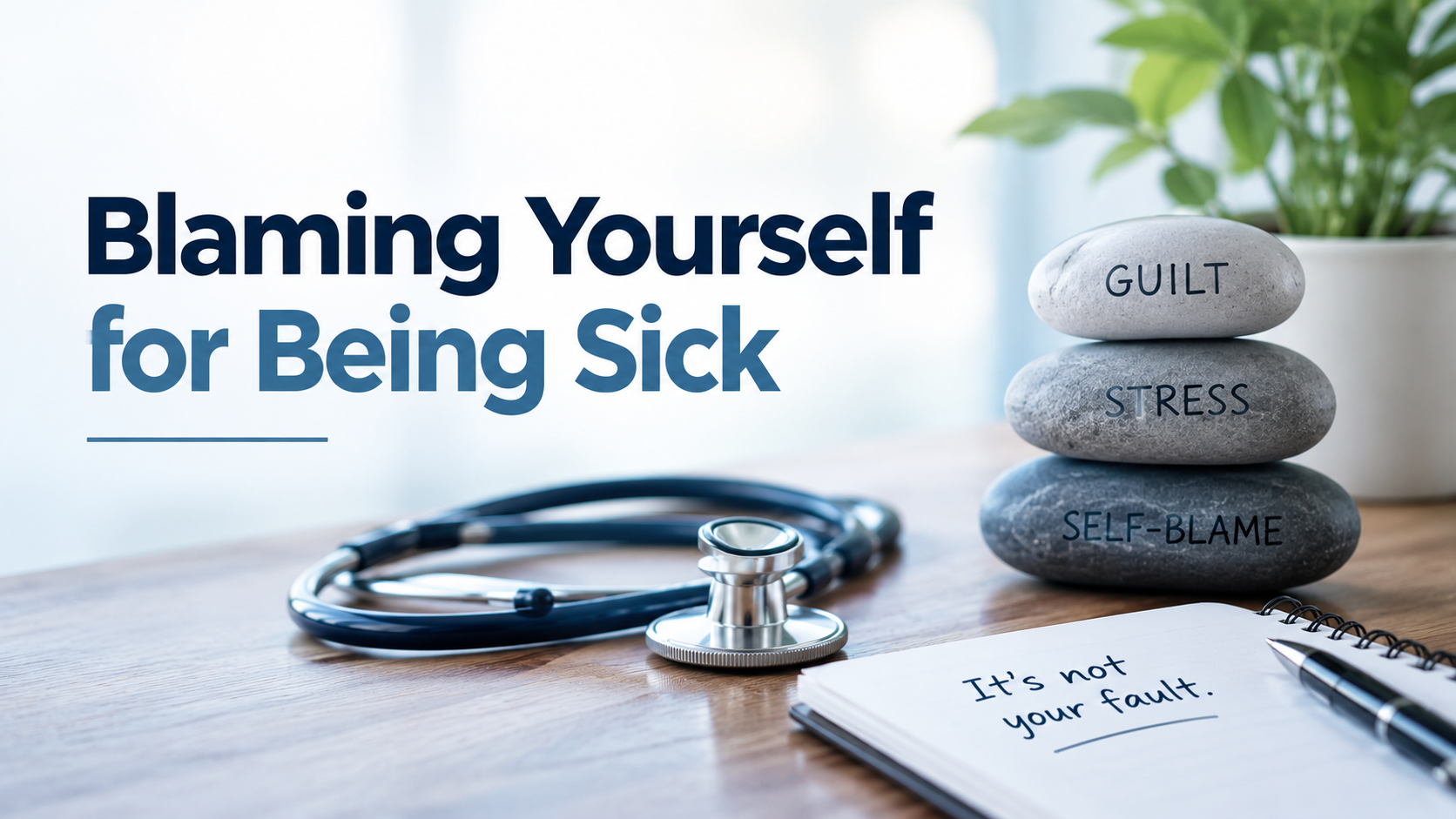
Not sorry for taking up my time. Sorry for having been ill. He said he supposed he had let himself get run down, that he had not been looking after himself properly, and that he had probably brought it on himself.
He had had an infection. He had caught it from another person, the way people catch things. And he was sitting in front of me apologising for it.
What I nearly said
I want to be honest about the first thing that went through my head, because it is the whole reason I am writing this.
My instinct — trained over years, meant kindly — was to agree with him a little. To say something about resilience, about how a body that is well looked after tends to cope better, about how we could work on that together. Every word of it true enough to say out loud, and all of it, in that particular moment, an answer to a question he should never have been asking himself.
He was not asking me how to be healthier. He was asking me to confirm that his illness had been a verdict on him. And I came very close to nodding.
What a microscope took away
There is a date I think about more than most people in my field probably do.
In 1882, a physician stood up in Berlin and showed an audience the bacterium that causes tuberculosis. Until that evening, the disease was called consumption, and it was understood as something a person was or became — inherited, or constitutional, or the result of how somebody lived. It appeared in novels as a kind of revelation of character. People carried it as a judgement as much as an illness.
One demonstration ended that. It was an infection. People had it because they had breathed in bacteria somebody near them was carrying, and nothing about their discipline or their temperament had issued the invitation.
Everyone remembers that as a scientific advance, and it was. I think the bigger thing it did was give a great many people their dignity back — and the moment I find most interesting is not the discovery itself but how quickly the instinct it displaced found new words.
The same idea, in a newer vocabulary
Nobody says consumption reveals the soul any more. What they say now is this.
I must have let my immunity drop. I was burning the candle at both ends. I should have been taking better care of myself. My body let me down. I have heard every one of those in my office, usually from someone who did nothing except stand near the wrong person on a bad day.
It is the old idea wearing modern clothes, and the reason it survives is that it offers something. If illness is a verdict, then illness is controllable, and a frightening world becomes a manageable one. That trade feels like empowerment. It is usually just guilt with better branding.
The part of this that is my own profession’s problem
Here is the uncomfortable bit, and I would rather say it myself than have somebody else say it about me.
I have spent my career on the idea that the body has a remarkable capacity to repair and regulate itself, and that we can do a great deal to support it. I believe that. I have built everything I do on it.
But every belief has a shadow, and the shadow of this one is that a person who got sick must have failed at it.
That is not what the idea means. It is, however, what a frightened person hears if you are not careful — and people in my field are in an unusually tempting position to let them hear it, because it makes us the solution. The guilt is good for business and terrible for patients, which is exactly the combination that should make anyone suspicious of themselves.
I have written before about the pull of being the person with the answer, in the answer they wanted me to give, and about the discipline of declining in I built a reputation on not doing this. This is the same muscle, used in a different direction.
What I said to him instead
I told him he had caught something from another person, and that there was nothing to apologise for.
Then I said the part that mattered more. Looking after yourself is worth doing because it makes life better — not because it buys immunity from misfortune, and not retroactively, as a verdict on a year you have already lived through. Those are two completely different reasons to drink more water, and only one of them is any good to a person.
We talked about what he actually needed, which was sleep he had not had in months, strength that had drained away, and a system still braced from a long stretch of being unwell. Ordinary rebuilding. The practical version of it is written up properly at BodyCharger, and the clinical side at The Nerve Health Institute.
None of that needed him to have been at fault for anything.
Why I think it matters more than it sounds
This is not only about being kind, although it is partly that.
A person who believes their illness was a personal failure behaves differently. They delay going back, because going back means admitting the failure again. They under-report symptoms. They are drawn to whoever promises the most control, which is rarely whoever is telling them the truth. And they recover worse, because shame is not a good foundation to rebuild on.
Whereas a person who understands that they caught something, and that recovery is a stretch of road with a known shape, tends to do the unglamorous things that actually work. They finish their treatment. They pace themselves. They ask for help earlier. They are easier to help, and they get better faster.
The thing I would want you to take
If you have been ill and some part of you has been quietly building a case against yourself — that you let it happen, that you were not careful enough, that it says something about you — I would like to put that down for you.
It was settled in a lecture hall in Berlin a long time ago, and the settlement was in your favour. You did not deserve it, you did not invite it, and it was never a verdict.
What is left is just the rebuilding, which is ordinary work, and which goes better without the extra weight. I have written about the slow version of that lesson in ten years of nearly.
More of what I have written is at the writing page. How I came to practise this way is the about page, and you can always get in touch.
Dr. Chris Cormier, DC
Lafayette, Louisiana
Clinic care at nervehealth.com. At-home protocols at bodycharger.com. Circulation and oxygenation at ebooprime.com.
Spark your cells to optimal longevity.