By Dr. Chris Cormier, DC
There is a particular way women with endometriosis talk in a first consultation, and it took me a while to understand what I was hearing.
They over-explain. They bring dates and documents. They apologise for taking up time. And somewhere in the first ten minutes, almost every one of them says a version of the same sentence: I know this is going to sound dramatic, but.
That sentence is not about pain. It is what is left after years of describing pain to people who did not believe it. And after nearly 30 years in practice, I have come to think that understanding it is the first requirement for being any use to these patients at all.
The Years Before Anyone Believed Them
Diagnostic delay in this condition is measured in years rather than months. Think about what that actually means in a life.
It means being told as a teenager that bad periods are normal. It means a decade of appointments that end with nothing found. It means being asked whether you might be anxious, or stressed, or seeking attention. It means eventually managing the pain quietly because raising it stopped producing anything useful.
By the time a woman reaches me, she has usually had a diagnosis confirmed — often surgically — and she is still carrying the habit of being disbelieved. That habit makes her a worse historian of her own body, because she has learned to minimise. A large part of my job in that first hour is simply making it safe to stop.
“Your Tests Are Normal” Is Not the Same as “Nothing Is Wrong”
This is the sentence that does the most damage in medicine, and it is rarely meant unkindly.
A test answers the question it was designed to answer. When it comes back clear, it has ruled something out. It has not explained what you are experiencing, and it certainly has not established that you are not experiencing it.
In endometriosis this gap is unusually wide, because pain burden famously does not match what is visible. A small amount of disease can produce severe pain. Extensive disease can be relatively quiet. Anyone who has tried to reconcile those two facts using a scan alone has been working with the wrong tool.
What I Am Actually Looking At
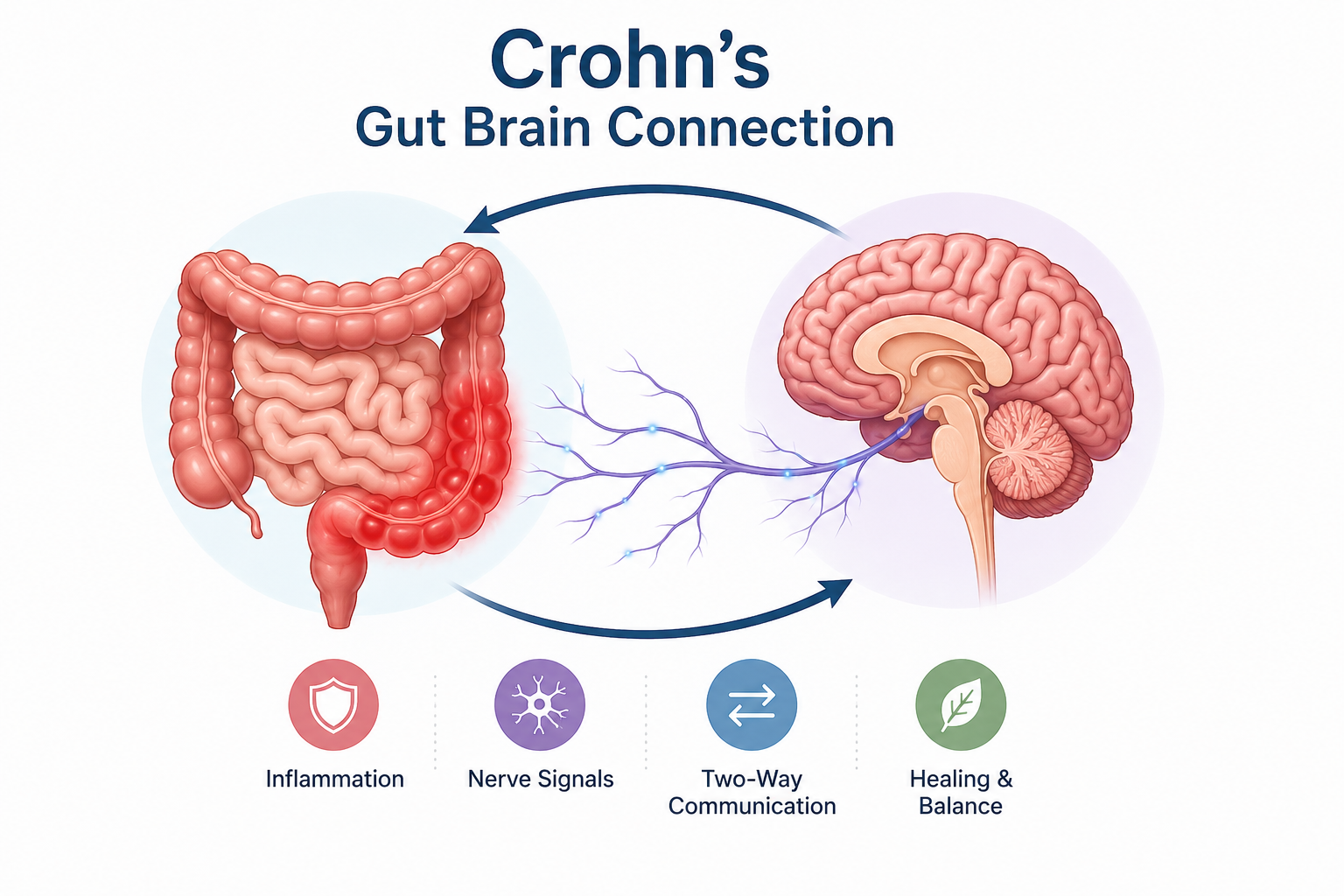
Endometriotic lesions are not inert tissue. Research has shown they carry a markedly increased density of small nerve fibres — the sensory fibres that carry chronic pain. The disease and the nervous system grow into one another.
Over years of that signalling, the system doing the carrying changes. The spinal cord and brain become more responsive, the threshold for what registers as pain falls, and pain stops tracking the menstrual cycle. Researchers call this central sensitization, and it is found in a large share of women with this condition.
It is also why excision surgery — which is the right operation, and remains the gold standard for the disease — can leave pain behind. Removing the lesion removes the original input. It does not switch off an amplifier that is already running.
So when a woman tells me the surgery went perfectly and she still hurts, I do not hear a contradiction. I hear a description of which half of the problem was addressed.
Why I Ask About Everything Else
Women with endometriosis rarely arrive with endometriosis alone.
Chronic fatigue. Migraine. Digestive problems. Widespread pain. Other autoimmune diagnoses. These cluster together far more often than chance explains, and each one has usually been assigned to a different department and treated in isolation.
I want the whole timeline instead — physical events, sustained emotional load, environmental exposures, when sleep changed, when energy changed, what order everything arrived in. Women frequently go quiet partway through that conversation, because it is the first time anyone has asked them to lay it all out as one story rather than five separate complaints.
The Ingredients I Come Back To
Everything I do rests on a framework I have built over decades. I call it the OWL Method — Oxygen, Water and Light — because these are not wellness ideas, they are what your cells are physically made of and run on.
Oxygen
The number one ingredient in a cell, and the first thing to run short. Years of pain and guarding produce shallow breathing, and shallow breathing keeps the system leaning toward protection rather than repair — exactly the wrong direction when amplification is the problem. This is why I start people on breathing before anything expensive.
Water
You are around 60% water, and every delivery and clearance transaction happens in that medium. Quality matters as much as volume, and most people are short on both without realising it.
Light
Your nervous system runs on light energy travelling like fibre optics to every cell. We evolved under a sun that is roughly half near-infrared and now live almost entirely indoors. Morning daylight anchors the rhythm that governs sleep depth, and sleep is where repair happens.
Beyond those sit frequency, magnetism and nutrients. Almost everyone starts at nutrients and skips the whole hierarchy above it.
What I Use, and Why
The 88-nerve assessment
Your brain is a power company wired to trillions of cells through 88 major nerves branching off the brain and spinal cord. I test function across all of them and map where power is not arriving.
With these patients I pay particular attention to the pelvic supply and to the endocrine glands — ovaries, thyroid, pituitary, hypothalamus, adrenals — because hormone production depends on those connections being intact, and hormones are running through almost every symptom on the list. Where a woman has had tissue removed, we work with what remains. See Quantum Neurology.
Oxygen, light, frequency and magnetism
HBOT drives oxygen into tissue at concentrations breathing alone cannot reach, and EWOT alternates high-concentration oxygen with a reduced mixture during light exercise to trigger vasodilation — delivery as well as supply, with exercise light enough to suit someone whose pain limits what they can do.
Theralight360 delivers full-body red and near-infrared photobiomodulation at therapeutic intensity. BRT Bioresonance works with the resonant tune each tissue carries — uterine cells are tuned differently from ovarian cells, differently again from bone, like strings on a guitar. PEMF & Grounding handles the magnetic side, restoring a charge from the earth that shoes and indoor living have taken away.
And EBOO Prime for whole-system oxygenation and detoxification support. Endocrine-disrupting chemical exposure is an active area of research in this condition, and supporting the body’s overall clearance capacity is part of how I think about it.
I set the pace low at the start, and I say why. A sensitized nervous system reads intensive input as another threat, which is exactly why aggressive protocols backfire in the women who most want fast results.
What I Will Not Claim
I do not treat endometriosis, and I do not remove lesions. Expert excision surgery remains the gold standard for the disease itself, and a skilled specialist gynaecologist is the person for that job. Nothing I do is a substitute for it.
I also do not diagnose it. Given how long women already wait for a diagnosis, anyone in my field who encourages you to explore with them before you have been properly assessed is adding to the delay that has already cost you years. If you have symptoms and no diagnosis, go to a specialist gynaecologist first.
And I will not tell you that this condition was caused by something you did. I take a detailed history of physical, emotional and environmental stress because it tells me about your current capacity — not because I think it explains why you developed endometriosis. Women with this condition have been handed enough blame already, and I am not adding to the pile.
What I work on is the nervous system layer — the amplification surgery cannot reach, the nerve supply to the pelvis and endocrine glands, and the daily capacity everything else depends on. That is a real contribution, and being precise about its limits is what makes it worth anything.
Where I Would Start
If you are living with this, the first steps are not ones you need me for.
Protect sleep above everything else. Breathe deliberately — five minutes lying down, exhale longer than inhale, several times a day. Keep hydration steady. Get daylight early. Move within what today allows rather than what last year allowed.
Then keep one line a day: pain level, whether it still tracks your cycle, fatigue, sleep, and what each activity cost you the following day. Whether your pain has become acyclical is the single most useful observation you can bring to a gynaecology appointment, because it points directly at which mechanism is now dominant.
If you want the at-home material, BodyChargers covers it, including frequency device settings for the endocrine glands. If you want a full functional assessment, the Nerve Health Institute in Lafayette is where that happens.
And whatever else you take from this: pain during sex, pain that stops you working, and pain nobody has taken seriously are not things to accept quietly. You were right to keep pushing. Keep pushing.
— Dr. Chris Cormier, DC
Frequently Asked Questions
Can a holistic approach to endometriosis replace surgery?
No. Expert excision remains the gold standard for the disease itself, and nothing I do removes a lesion. What a holistic approach addresses is the nervous system layer alongside that — the pain amplification, the nerve supply to the pelvis and endocrine glands, and daily capacity.
Why do I still hurt when my surgeon says everything went well?
Because lesions are only one driver. Years of pain signalling change how the nervous system processes pain, and that amplification does not switch off when the original source is removed. Persistent pain after anatomically complete surgery is a recognised pattern, not a sign that you are imagining it.
Do you think endometriosis is caused by stress or lifestyle?
No. I take a detailed stress history because it tells me about your current capacity, not because I think it explains why the condition developed. Women with endometriosis have been blamed enough, and I am not interested in adding to that.
I have symptoms but no diagnosis. Should I come to you first?
No. See a specialist gynaecologist. Women already wait years for a diagnosis in this condition, and time spent exploring alternatives beforehand adds to a delay that has already cost you a great deal. Come afterwards if you want to.
Why do I have so many other conditions as well?
Fatigue, migraine, digestive problems, widespread pain and autoimmune diagnoses cluster with endometriosis far more often than chance explains. Years of inflammation and amplified pain signalling affect systems well beyond the pelvis — which is why treating each one in a separate department tends to disappoint.
What would you change first if I only did one thing?
Sleep. It is free, it affects pain processing directly, and it is the thing most commonly wrecked in the women who come to see me. I would rather fix that than sell you a session.
Want to Go Deeper?
Start with the at-home methods, or book a full functional assessment at the clinic.
Explore BodyChargers → bodycharger.com
Visit the Clinic → nervehealth.com/get-treatment/